

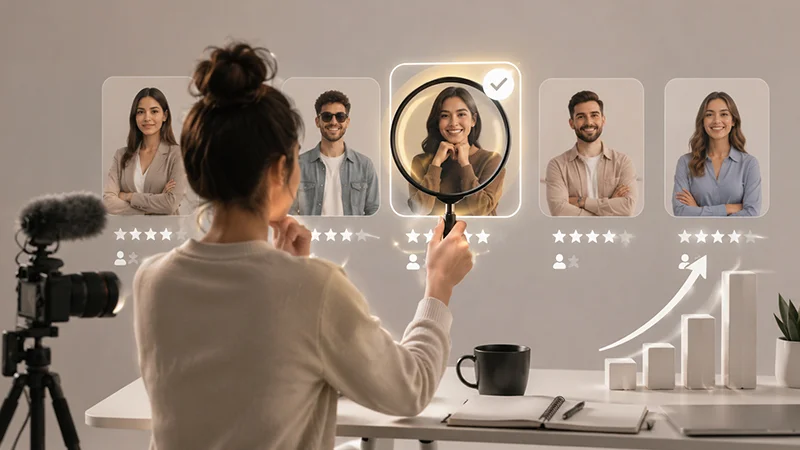
Influencer marketing has become an effective way for brands to reach targeted audiences, build trust, and create engaging content. But with thousands of creators available across Instagram, YouTube, LinkedIn, and other platforms, choosing the right influencer can be challenging.
The influencer with the largest follower count is not always the best choice for your campaign. A successful collaboration depends on audience relevance, engagement, content quality, credibility, and campaign objectives.
So, how can your brand find the right influencer?
Let's explore the key factors you should consider before starting an influencer collaboration.
1. Start With Your Campaign Goal
Before searching for influencers, define what you want to achieve.
Your objective could be:
- Increase brand awareness
- Generate leads
- Drive website traffic
- Launch a new product
- Increase sales
- Improve social media engagement
- Create user-generated content
- Reach a specific audience
Your goal will influence the type of creator, platform, content format, and campaign structure you need.
For example, if your goal is brand awareness, a creator with a broad reach may be useful. If your objective is conversions, a niche influencer with a highly engaged audience may deliver better results.
2. Understand Different Types of Influencers
Influencers can generally be categorized based on their audience size.
Nano Influencers
Nano influencers typically have smaller but highly engaged communities. They can be useful for local businesses, niche products, and community-focused campaigns.
Micro Influencers
Micro influencers have a larger niche audience while often maintaining strong engagement and closer relationships with followers. They are particularly useful when brands want targeted reach and authentic recommendations.
Macro Influencers
Macro influencers have significant reach and can help brands reach a larger audience quickly. They may be suitable for major awareness campaigns and product launches.
Mega Influencers
Mega influencers and celebrities can provide massive visibility, but collaborations can require larger budgets and may not always provide the highest engagement or audience relevance.
The best influencer is not necessarily the biggest influencer. It is the one that best matches your campaign goals.
3. Check Audience Relevance
Follower count should never be your only selection criteria.
Ask yourself:
Does this influencer's audience actually match my target customers?
Review factors such as:
- Age
- Gender
- Location
- Interests
- Purchasing behavior
- Language
- Lifestyle
- Professional background
For example, a Chennai-based restaurant may benefit more from collaborating with a local food creator whose followers live in Chennai than with a celebrity whose audience is spread across the country.
Audience relevance can have a direct impact on campaign performance.
4. Look Beyond Follower Count
A creator with 500,000 followers may have lower engagement than someone with 50,000 highly active followers.
Look at metrics such as:
- Likes
- Comments
- Shares
- Saves
- Reel views
- Story views
- Click-through rates
- Engagement rate
Also pay attention to the quality of engagement.
Hundreds of generic comments may not be as valuable as meaningful conversations from people who are genuinely interested in the creator's content.
5. Evaluate Content Quality
Your influencer becomes an extension of your brand during a collaboration. Their content quality can therefore influence how audiences perceive your business.
Review their previous content and consider:
- Video and image quality
- Storytelling ability
- Creativity
- Editing
- Captions
- Brand integration
- Consistency
- Communication style
Look for creators who can naturally integrate your product or service into their existing content rather than simply placing your logo or product in a post.
6. Check Authenticity and Credibility
Trust is one of the biggest advantages of influencer marketing.
Before collaborating, examine whether the influencer genuinely connects with their audience.
Look for:
- Authentic conversations
- Genuine product recommendations
- Consistent content
- Transparent sponsored content
- Meaningful audience interactions
Also review their previous brand partnerships. If they promote completely unrelated products every week, their recommendations may appear less authentic.
7. Review Previous Brand Collaborations
Past collaborations can tell you a lot about how an influencer works with brands.
Check whether they have experience creating:
- Product reviews
- Reels
- Tutorials
- Unboxing videos
- Testimonials
- Lifestyle content
- Event coverage
- Educational content
Look at the quality of their previous campaigns and, where possible, ask for performance metrics.
A creator who has successfully worked with similar brands may understand your audience and campaign requirements better.
8. Choose the Right Social Media Platform
Not every influencer is equally effective on every platform.
Choose the platform based on where your target audience spends time.
For example:
Instagram: Fashion, beauty, food, lifestyle, fitness, and consumer products
YouTube:Technology, education, reviews, tutorials, and long-form content
LinkedIn: B2B, business, technology, recruitment, and professional services
Facebook:Community-focused and broad demographic campaigns
Short-form video platforms:Entertainment, lifestyle, trends, and product discovery
The right influencer on the right platform can make your campaign much more effective.
9. Consider Local Influencers
If your business serves a specific city or region, local influencers can be extremely valuable.
For example, a business targeting Chennai customers could work with Chennai-based creators who understand local culture, language, trends, and consumer preferences.
Local influencers can help brands create content that feels more relevant and relatable to the target community.
10. Set a Realistic Influencer Marketing Budget
Influencer fees can vary significantly depending on audience size, engagement, niche, content format, usage rights, exclusivity, and campaign duration.
Instead of spending your entire budget on one large creator, consider testing multiple relevant micro or niche influencers.
A well-planned campaign could include:
Multiple relevant creators → Different content formats → Wider audience segments → More campaign insights
Always clarify pricing, deliverables, usage rights, revisions, exclusivity, and payment terms before finalizing the collaboration.
11. Use Data to Make Your Decision
Influencer selection should combine creativity with data.
Create a shortlist and compare creators based on:
| Factor | What to Check |
|---|---|
| Audience | Location, age, interests |
| Engagement | Likes, comments, shares, saves |
| Content | Quality and consistency |
| Relevance | Fit with your brand |
| Reach | Potential campaign exposure |
| Credibility | Audience trust |
| Experience | Previous collaborations |
| Budget | Cost vs expected value |
This makes the selection process more objective and helps you identify influencers who offer the strongest potential value.
12. Build Long-Term Influencer Partnerships
Influencer marketing doesn't always have to be a one-time campaign.
Long-term partnerships can help creators become familiar with your brand and communicate your products more naturally.
Instead of:
One campaign → One post → Finished
Consider:
First campaign → Performance analysis → Repeat collaboration → Long-term partnership
Long-term creator relationships can help build stronger brand recognition and audience trust over time.
Common Mistakes to Avoid
Brands can waste their influencer marketing budget when they focus on the wrong factors.
Avoid:
- Choosing influencers only because of follower count
- Ignoring audience demographics
- Selecting creators unrelated to your niche
- Failing to check engagement
- Not reviewing previous content
- Giving unclear campaign briefs
- Ignoring usage rights
- Failing to track campaign results
- Treating every influencer the same
How to Measure Your Influencer Campaign
After the campaign goes live, measure its performance against your original objective.
Important metrics may include:
- Reach
- Impressions
- Engagement rate
- Video views
- Website traffic
- Link clicks
- Leads
- Sales
- Conversions
- Cost per result
For example, if your goal is awareness, focus on reach and impressions. If your goal is sales, track clicks, leads, conversions, and revenue.
This data can help you understand which creators performed well and improve future campaigns.
Find the Right Influencer, Not Just a Popular One
Choosing the right influencer is about finding the right combination of audience, relevance, engagement, content quality, credibility, platform, and budget.
A smaller creator with the right audience can sometimes create more meaningful results than a celebrity with millions of followers.
The key is to start with your campaign objective, understand your audience, research potential creators, evaluate their performance, and measure results after the campaign.
Looking for the Right Influencer Marketing Strategy?
Finding influencers is only one part of a successful campaign. The right strategy can help you identify relevant creators, develop effective campaigns, create engaging content, and measure performance.
At Yung Media, we help businesses strengthen their digital presence through influencer marketing, social media marketing, SEO, performance marketing, and digital marketing solutions.
If you're looking to connect with the right influencers and build campaigns that deliver measurable results, our team can help you develop a strategy aligned with your business goals.
Ready to Grow Your Brand With Influencer Marketing?
Partner with Yung Media, a digital marketing agency in Chennai, to build a smarter influencer marketing strategy and connect your brand with the right audience.
Explore Yung Media and take the next step toward stronger digital visibility, engagement, and growth.